



Compare bird-on-top animal stacks to others.
Choosing the right animal arrangement can make a small nursery feel calmer, taller and more thoughtfully put together. Compare bird-on-top animal stacks to others. The shape you choose affects how the eye travels around the room, how well the artwork suits a narrow wall and whether the display feels playful rather than crowded.
At Nursery Stickers, we love designs that give you room to change your mind. The Farm Animal Friends Wall Stickers bring a cheerful, storybook feel to children’s rooms, with an arrangement that works beautifully as a vertical focal point. Peel, stick and enjoy a little nursery magic without wallpaper paste or a decorating weekend. 💛
Introduction: Why Comparing Animal Stack Styles Matters for Your Nursery
The folk-art roots of bird-on-top stacks, the Town Musicians of Bremen
The familiar tower of animals with a little bird perched at the top has roots in folk illustration and the Brothers Grimm fairy tale Town Musicians of Bremen, published in 1819. In the story, animals climb onto one another to create a comical tower, turning teamwork into a memorable picture. That storytelling tradition helps explain why the format feels so natural in a child’s room: each animal has a place, a personality and a part to play.
What this guide will help you decide
Compare bird-on-top animal stacks to others. We’ll look at four arrangements through a parent’s eyes: visual weight, wall shape, styling flexibility and storytelling appeal. You’ll see why a small feathered character often gives a tall display a lighter finish than a large animal at the top, and which layouts suit a height chart, cot wall, reading nook or narrow corner. The aim is simple: help you choose artwork that feels balanced today and remains easy to restyle as your child grows.
How We Evaluated Nursery Animal Stack Configurations

Visual balance and weight distribution
We considered where each arrangement places its visual weight. A broad animal at the bottom gives a tower a grounded base, while smaller shapes above create a gentle upward rhythm. A bird, songbird or toucan at the crown usually leaves more open space around the top, so the display feels lighter rather than top-heavy. This vertical focal point can also draw the eye upwards, helping standard 2.4-metre ceilings appear taller in compact bedrooms, as noted in the supplied research findings.
Suitability for narrow walls and height chart placement
Wall width matters just as much as the illustration itself. Tall stacks make good use of slim sections beside a door, wardrobe or window, while a linear parade needs generous horizontal room. We also looked at how easily a design can sit near a height chart without competing with measurements, shelves or cot furniture. Clear spacing keeps the wall readable and stops several motifs from becoming visually busy.
Ease of removal and re-styling with removable decals
Nursery style rarely stays the same for long. Removable wall stickers let you test a layout, move a character slightly or refresh the theme without committing to paint or wallpaper. Our practical test is straightforward: can parents apply the stickers without a specialist toolkit, involve willing little helpers, then remove them cleanly when the room changes? The Farm Animal Friends Wall Stickers are easy to apply, truly cleanly removable, and designed for nursery wall decoration.
Child development benefits: visual tracking and storytelling
A stacked arrangement gives children a simple route for visual tracking, from the friendly base animal up to the character at the top. It also invites questions: Who is carrying whom? Where are they going? What might happen next? These open-ended prompts support shared storytelling without making claims about formal learning outcomes. We favour artwork with distinct faces, varied animal forms and enough negative space for each character to be noticed.
The Top Animal Stack Arrangements for Nurseries (Ranked)
Compare bird-on-top animal stacks to others. These four layouts show how a small change at the top can affect balance, placement and the overall mood of a child’s room.
1. Bird-on-Top Stack: The Clear Winner for Balance and Charm
Best for: narrow walls, height chart features and parents who want a playful focal point with a gentle finish.
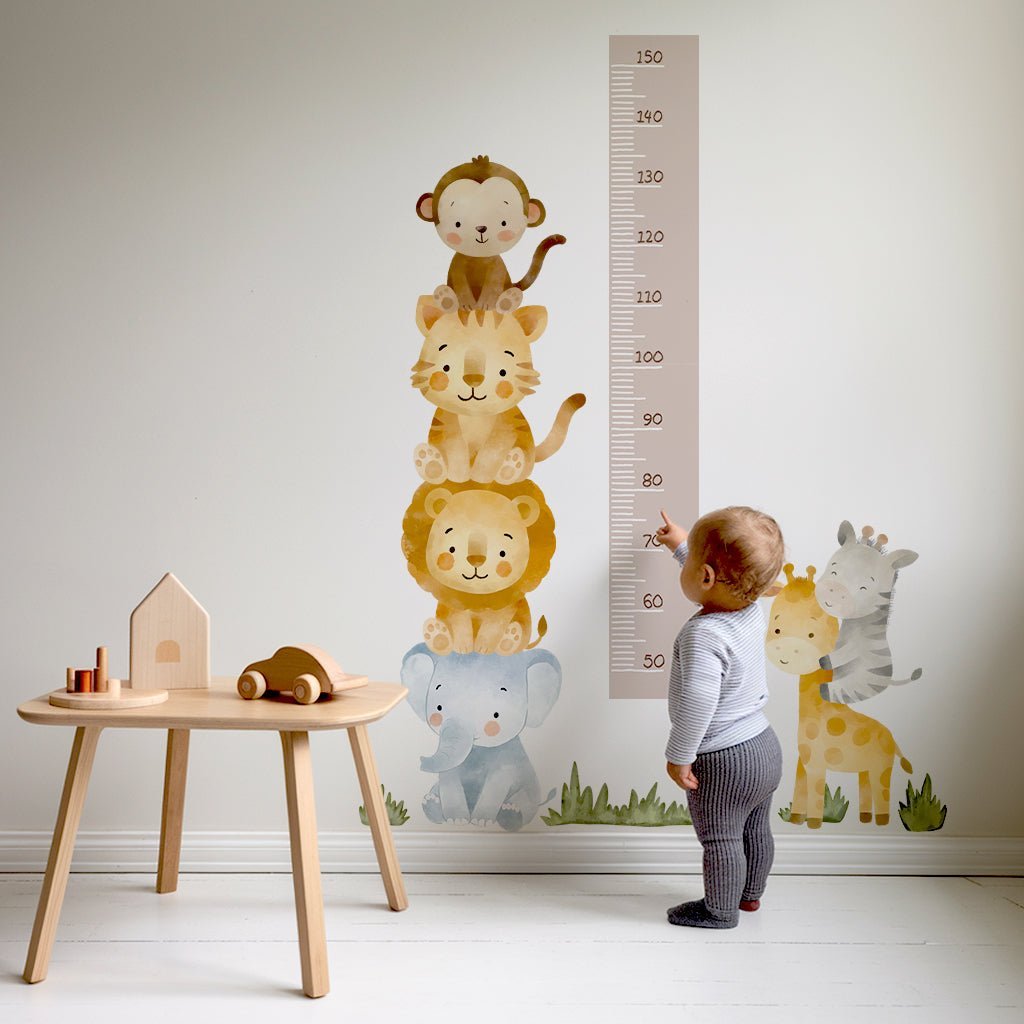
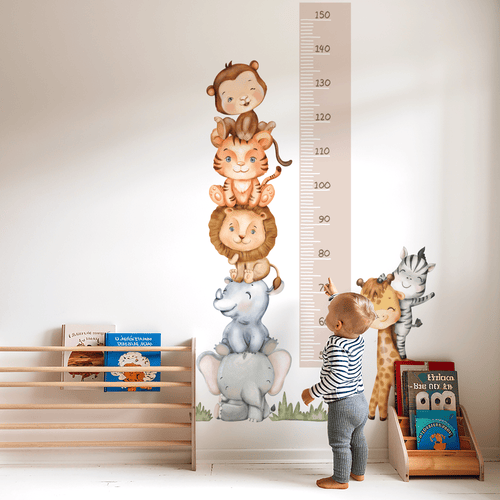
A bird-on-top stack usually offers the most pleasing visual progression. Larger animals anchor the lower section, the middle shapes create rhythm, and the small bird gives the crown plenty of breathing space. That light top note keeps the arrangement from feeling visually heavy, while the upward movement makes good use of vertical wall space. It works especially well beside furniture, above a low shelf or near a reading corner where the eye can follow the characters from bottom to top.
Pros
- Balanced from a broad base to a lighter crown
- Fits narrow vertical areas
- Supports simple storytelling and visual tracking
Cons
- Needs careful spacing if placed beside shelves or frames
2. Traditional Pyramid Stack: Sturdy but Less Dynamic
Best for: families who prefer a symmetrical, grounded composition on a clear section of wall.
A pyramid arrangement feels dependable because its widest shapes sit low and its layers become progressively narrower. It is easy to understand at a glance and can suit a classic nursery palette. Its regular structure may feel less lively than a bird-crowned tower, though, particularly if every row is the same distance apart. Use generous surrounding space and varied animal poses to prevent the display from looking stiff. Compare bird-on-top animal stacks to others. The bird-led version generally adds more personality at the highest point.
3. Horizontal Animal Parade: Best for Wide Walls, Not Corners
Best for: broad walls above a bookcase, along a playroom shelf or behind a changing area with plenty of width.
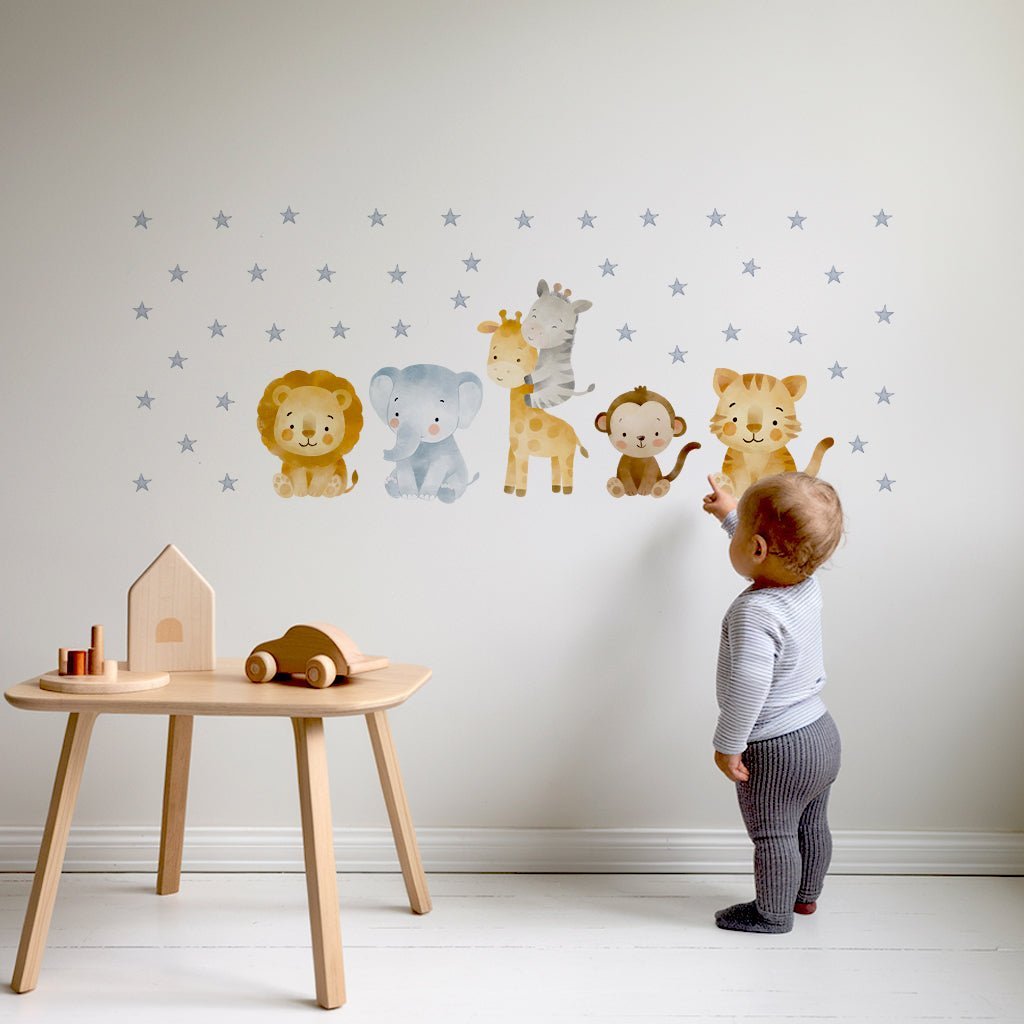
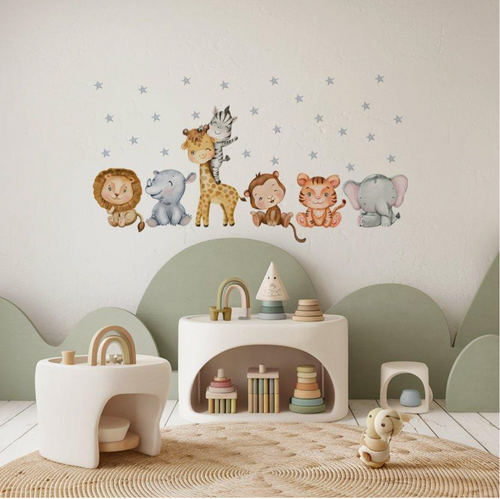
A horizontal parade creates a friendly procession rather than a central tower. It is excellent for showing several characters at once and can make a long, plain wall feel connected. Its main limitation is footprint: it needs width, so it may crowd a narrow nook or compete with a cot, wardrobe or door frame. The eye travels from side to side instead of upwards, making it less suitable when your aim is to make a compact bedroom feel taller.
4. Heavy-Topped Inverted Stack: A Design Challenge to Avoid
Best for: only carefully planned displays with ample negative space and a strong reason for reversing the usual order.
Placing the largest animal at the top can make a stack feel visually unsettled. The upper section attracts attention and may appear to press down on the smaller figures below. This style can also look awkward beside a height chart, where the eye expects a clear upward line. If you love the characters, consider rearranging them so the broadest form supports the display and a lighter animal finishes it. That small adjustment often creates a calmer nursery wall.
| Arrangement | Visual movement | Best wall shape | Overall nursery feel |
|---|---|---|---|
| Bird-on-top | Gentle upward rhythm | Narrow or vertical | Balanced, cheerful and story-led |
| Traditional pyramid | Steady and symmetrical | Open central wall | Classic and grounded |
| Horizontal parade | Side-to-side procession | Wide wall | Social and lively |
| Heavy-topped stack | Strong emphasis at the top | Large, uncluttered area | Bold but harder to balance |
Where to Place Your Animal Stack: A Room-by-Room Guide
Narrow corners or alongside doors
Vertical stacks are happiest in slim spaces beside a doorway, wardrobe or window. Their upward shape uses wall height without spreading into the walkway, making a bird-topped arrangement a lovely choice for compact nurseries. Leave enough breathing room around the stickers so the display feels intentional rather than squeezed between fittings.
Above the cot or changing table
Keep the artwork comfortably clear of the cot and changing area, with furniture placement and safe supervision taking priority. A simple animal tower can act as a gentle focal point above low furniture, while a horizontal parade suits a wider, uninterrupted wall. Avoid placing stickers where shelves, lamps or storage will hide the characters.
As part of a height chart feature wall
A narrow, gradually rising stack pairs naturally with a height chart because both encourage the eye to travel upwards. Position the animals to one side, leaving the measurements easy to read. The Farm Animal Friends Wall Stickers can help create a cheerful farm-themed feature without wallpaper paste or a permanent redesign. 💛
Playroom reading nooks and gallery walls
In a reading nook, place the stack where children can follow the characters while listening to a story. On a gallery wall, let the animal tower provide a tall centrepiece, then balance it with smaller prints rather than another large motif. Removable wall stickers make it easy to refresh the arrangement as furniture, interests and room themes change. Farm Animal Friends Wall Stickers are easy to apply and truly cleanly removable, so children can help with a supervised decorating session.
- Choose vertical stacks for narrow wall sections.
- Keep height charts and furniture details clearly visible.
- Leave negative space around each animal.
- Check the layout before peeling and sticking.
Frequently Asked Questions About Nursery Animal Stacks

Why is a small bird so often perched on top of animal stacks?
The little bird creates a light, cheerful finish and reflects folk-art storytelling, including the Brothers Grimm’s Town Musicians of Bremen. Its smaller shape helps the tower narrow naturally towards the top, so the display feels balanced rather than heavy.
Will bird-on-top decals stay in place over time?
Quality removable wall stickers should remain in place when applied to a clean, dry, smooth surface. Press each section down carefully, especially around edges, and follow the maker’s application guidance. Keep the wall free from dust and damp before decorating.
Can I mix stack styles in the same room?
Yes, though one arrangement should lead the room. Pair a vertical bird-topped stack with a small horizontal animal scene in a playroom, using similar colours and generous space between them. This keeps the story playful without making the walls feel crowded.
How do I remove and reapply stack decals without damaging walls?
Lift a corner slowly and peel the sticker back gently rather than pulling it sharply away from the wall. Store reusable pieces flat if the product allows reapplication, and avoid pressing them onto dusty or freshly painted surfaces. Farm Animal Friends Wall Stickers are easy to apply and truly cleanly removable, making future room changes refreshingly simple.
Frequently Asked Questions
Does an animal stack really work in a nursery?
An animal stack works well in a nursery when its shapes are spaced clearly and arranged from a broad base to a lighter top. Bird-on-top animal stacks create a gentle upward path for the eye, making them a charming choice for a narrow wall or a small reading corner.
What is the 3-3-3 rule for birds in an animal stack?
The 3-3-3 rule for birds is not a recognised nursery design rule, but it can inspire a simple layout with three visual levels, three main animal shapes and three clear gaps. A balanced stack should still prioritise spacing, a stable lower animal and a small bird or expressive character at the crown.
What is the most clingy bird for a bird-on-top animal stack?
A small, friendly-looking bird is the most suitable clingy character for a bird-on-top animal stack. The bird does not need to represent a specific species, since its role is to give the tower a light, playful finish while supporting a simple story about the animals working together.
Which bird can beat an eagle in an animal stack story?
No bird needs to beat an eagle for an animal stack story to be engaging. Nursery artwork can focus on cooperation instead, with each animal contributing to the tower and the bird at the top adding personality without making the scene feel competitive or crowded.
What bird annoys an eagle in a nursery animal story?
A small, cheeky bird can playfully annoy an eagle in a nursery animal story, though a bird-on-top stack usually works best without focusing on conflict. Distinct faces and varied animal forms give children plenty to discuss, such as who is carrying whom and where the group might be going.
Is a bird-on-top animal stack better than a pyramid arrangement?
A bird-on-top animal stack often feels lighter and more playful than a traditional pyramid arrangement. The pyramid gives a sturdy, symmetrical impression, while the small bird at the crown creates breathing space and draws the eye upwards, which suits slim sections beside a door, wardrobe or window.
How should I choose between a stacked animal arrangement and an animal parade?
Choose a stacked animal arrangement for a narrow vertical area, and choose an animal parade for a broad, open wall. Bird-on-top animal stacks make better use of height and create a clear focal point, while horizontal layouts allow each character to sit side by side with more room around them.