



Compare peel-and-stick safari towers to wallpaper.
Compare peel-and-stick safari towers to wallpaper by considering wall coverage, fitting effort and whether you may want to change the room later. For a focused animal feature, a wall sticker is often the simpler, more flexible choice.
Key Takeaways
- Peel-and-stick safari towers work best when you want a single eye-catching feature rather than covering an entire wall.
- Wallpaper demands more time, prep work and precision during fitting, while stickers can be applied in minutes with no mess.
- Because children's tastes change quickly, removable stickers make it easy to refresh the nursery without damaging the walls.
- Wallpaper may offer fuller coverage, but it often leaves residue or requires steaming when you decide to redecorate.
- For most busy parents, stickers deliver the safari look at a lower cost and with far less commitment.
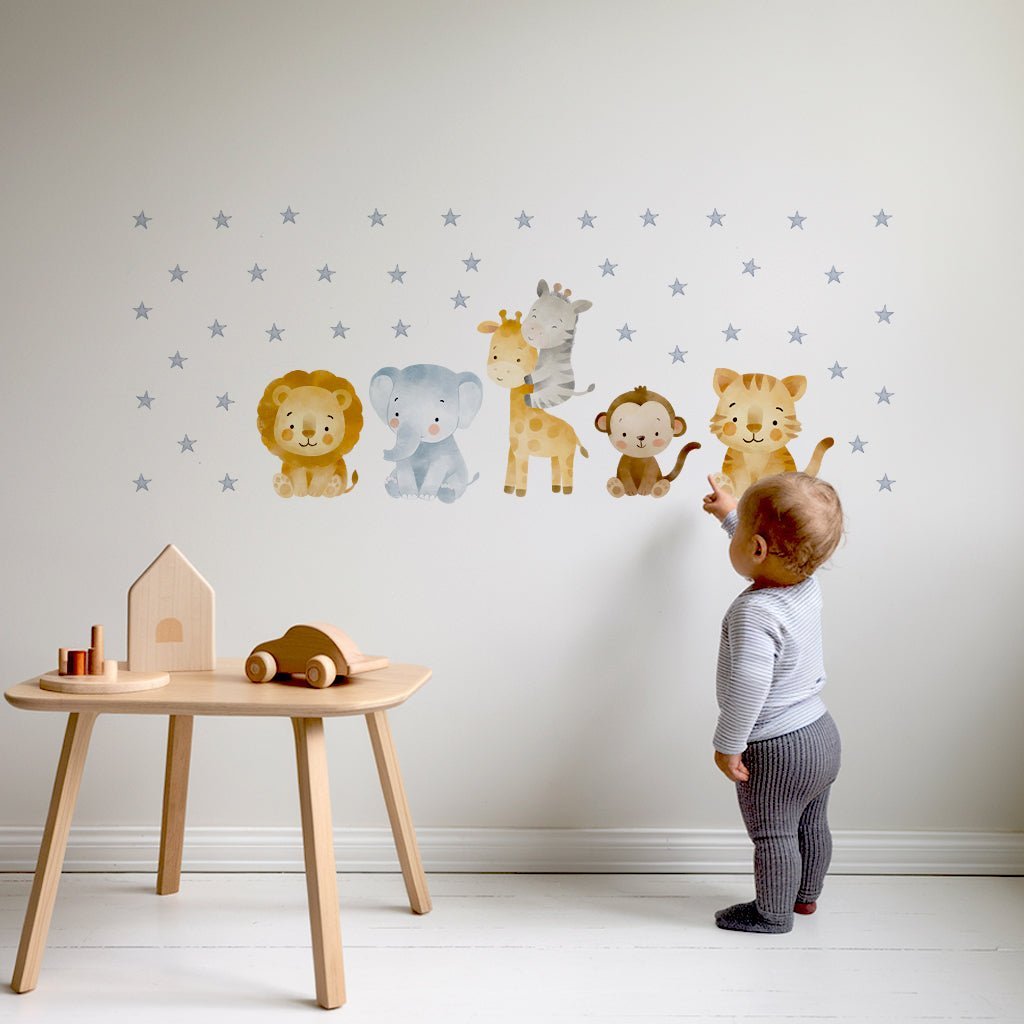
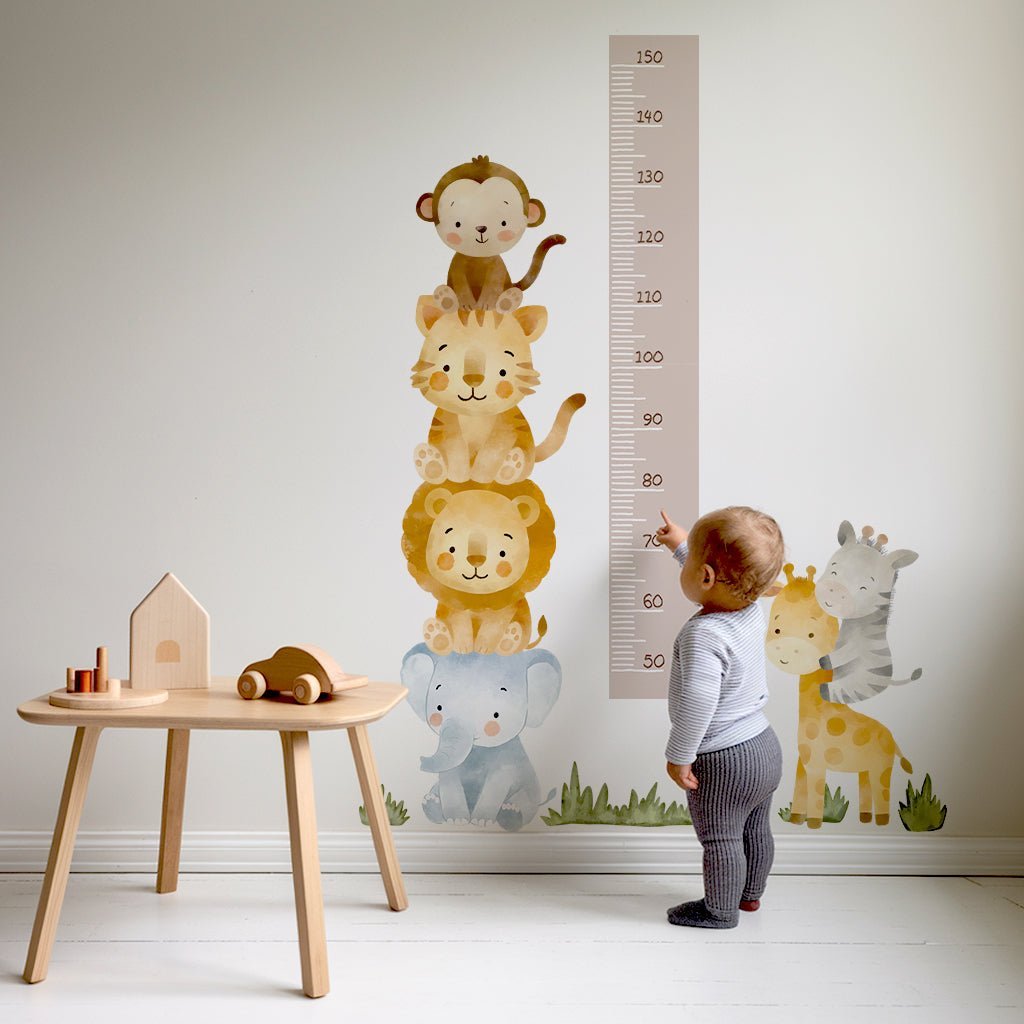
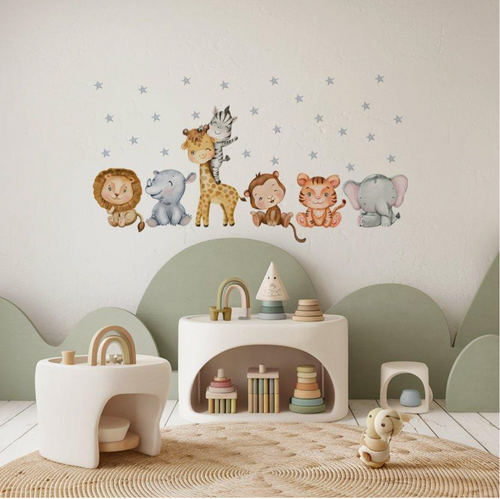
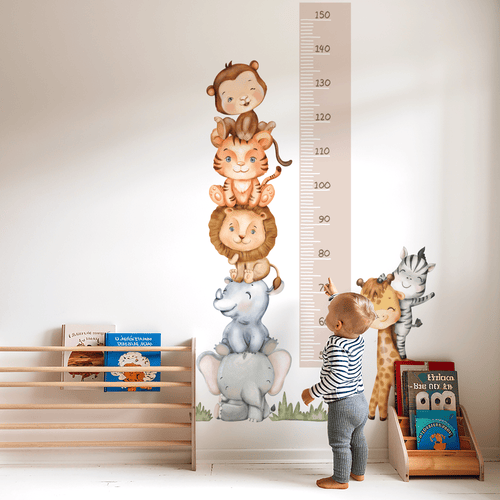
The Large Safari Tower of Friends Animal Wall Sticker brings safari animals together in a tall design. Wallpaper suits parents who want a pattern or mural across a broader area. Here’s how the options compare for a nursery.
Peel-and-Stick Safari Towers vs Wallpaper: The Quick Answer
What each option actually is (decal set vs wallpaper roll or mural)
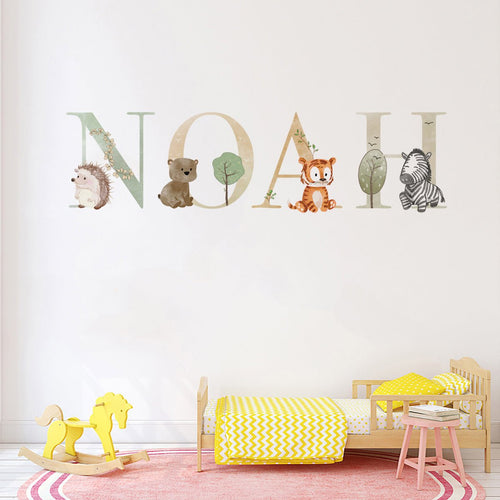
A safari tower decal is a decorative wall sticker, with safari animals arranged in a tall composition rather than a repeating pattern across the room. The Large Safari Tower of Friends Animal Wall Sticker is designed for a children’s room or nursery, creating a playful focal point without covering every wall.
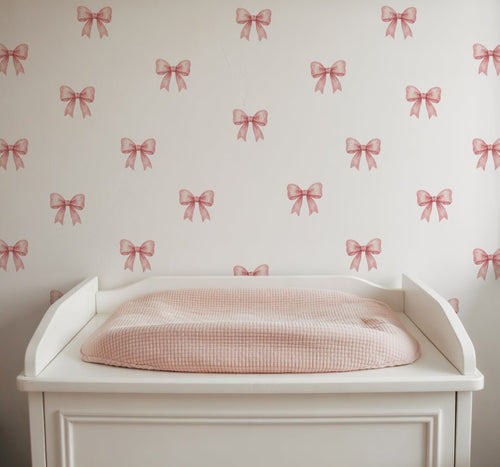
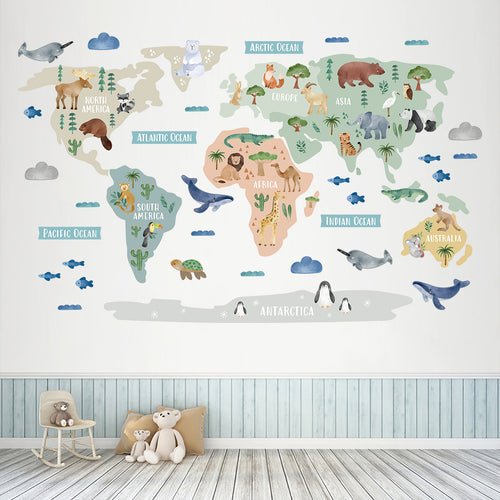
Safari wallpaper is sold by the roll or as a mural. A roll repeats its print across the wall; a mural creates one larger scene. Coverage, fitting and finish differ from wall stickers. A standard peel-and-stick roll measures 27 inches by 20 feet and covers roughly 45 square feet, according to Rifle Paper Co. and York Wallcoverings. Rifle Paper Co. lists its safari mural at around 62 square feet.
Why we compared them: our evaluation criteria
We compared the likely spend for your chosen wall, preparation and fitting effort, ease of changing the look, and what removal may mean for the wall beneath. We also considered coverage and how each option can adapt as a child’s interests shift from safari animals to something new.
These details matter in a rented home, where wall condition and a deposit may be concerns. Surface, product instructions and application all affect the result, so treat removability as a practical consideration, not a guarantee. Choose a finish that fits your room and your appetite for a decorating project.
Top of the Tower: Safari Tower Decals vs Safari Wallpaper, Scored

A sticker makes a contained animal feature; wallpaper changes a much larger area. This comparison weighs cost, fitting, removal, flexibility and materials, while allowing for differences between brands and walls.
| What matters | Safari tower wall sticker | Safari wallpaper |
|---|---|---|
| Cost for the wall | One feature-sized design can avoid buying enough covering for a whole wall. Check the product price and dimensions before comparing. | Budget for the rolls or mural coverage required, plus any paste, tools or additional supplies for the chosen type. |
| Fitting effort | A single tall design is a smaller task. Allow around twenty minutes as a guide, depending on the wall and careful positioning. | Expect more planning and fitting work, especially with several lengths, pattern matching, seams or paste. A full wall may take much longer than a sticker feature. |
| Changing the look | A focused decorative decal offers a less extensive change to the room’s scheme. | A wider pattern or mural gives a more immersive finish, but changing it means tackling a larger decorated area. |
| Removal and rental use | Removal may be more straightforward than stripping wallpaper, but results depend on the wall finish and product guidance. | Peel-and-stick wallpaper may come away differently from pasted wallpaper. Check the maker’s removal advice and your tenancy requirements. |
| Materials and safety | Material details vary by sticker. Check the specific listing and follow its application guidance. | Wallpaper construction varies too, including non-woven options. Review the manufacturer’s product information rather than assuming all papers are alike. |
Cost per wall: decal sets vs rolls, paste and tools in GBP
There isn’t one reliable price comparison without the wall size and exact products. A tower sticker covers a defined section; wallpaper costs depend on the rolls or mural panels needed. Add paste and tools where required, and check that the quoted price covers your wall. Compare the total outlay in GBP, not one roll’s price against one sticker.
Installation time and difficulty: twenty minutes vs a weekend job
A tall decal is a smaller job: mark its position, then carefully smooth it onto the wall. Around twenty minutes is a guide for a simple application, not a promise for every room. Wallpaper takes more preparation and precision, with seams and pattern alignment to consider. A larger wall or first-time fitting can become a substantial task, particularly if you’re working alone.
Removability and rental suitability: deposit-safe removal vs residue risk
Both options need caution in a rental. A removable sticker may be easier to take down than wallpaper, but no wall finish is guaranteed to remain unchanged. Paint condition, surface texture, age and application all matter. Wallpaper removal can take more effort, and results vary by paper and wall. Check your landlord’s decorating rules and the manufacturer’s removal instructions first.
Design flexibility and longevity as your child grows
A safari tower creates a focal point without committing the whole room to one theme, making it easier to refresh bedding, wall colour or accessories as your child grows. Wallpaper makes a bigger visual statement and may suit a family who loves the safari look for longer. Decide whether you want a feature that can sit alongside future themes or walls that carry the main design.
Materials and nursery safety: check the product details
There’s no single material standard shared by every wall sticker or wallpaper range. Read the listing for material information and care instructions, and follow the maker’s application and removal guidance. Keep decorating products out of reach during fitting, and make sure the finished décor is secure. Near a cot, plan the design so it does not interfere with the cot or its safe use.
How to Apply Each Option (And the Freshly Painted Wall Rule)
A wall sticker is a contained job; wallpaper asks you to plan coverage, manage lengths and take care around joins. For either option, a clean, dry wall and a careful read of the maker’s instructions provide a good starting point.
Applying safari tower decals: a step-by-step walkthrough
The Large Safari Tower of Friends Animal Wall Sticker features safari animals arranged in a tower for a children’s room or nursery. Its tall composition can create a playful focal point without covering the whole wall. Check the surface and application guidance, then take time to choose the position.
- Wipe the wall with a clean, dry cloth and let it dry fully. Avoid dusty, damp or visibly uneven areas.
- Hold the design against the wall and mark a light guide. Step back to check the height and spacing before peeling.
- Peel away the backing gradually, starting at one edge. Press the exposed section onto the wall, smoothing outwards as you go.
- Continue slowly down the design, smoothing each area so it sits flat. Check the edges and follow the listing’s care instructions.
For a personal nursery feature without a full-room decorating project, the Large Safari Tower of Friends Animal Wall Sticker gives the wall a magical safari touch.
Hanging safari wallpaper: seams, pattern matching and what to expect
Wallpaper needs more measuring and alignment than a tower decal. Check the wall dimensions and the roll or mural coverage, then confirm how the design repeats and where lengths should meet. Standard peel-and-stick rolls are often 27 inches wide by 20 feet long, covering roughly 45 square feet, according to Rifle Paper Co. and York Wallcoverings. Coverage and fitting instructions vary by product.
Mark a straight starting line, prepare each length as directed and work steadily across the wall. Match the print at each join before smoothing it down, since a small shift can make a repeating pattern look uneven. A second pair of hands can help hold a long length level while you position it. Allow time for measuring and trimming around corners, sockets and window frames.
How long to wait after painting before applying decals or wallpaper
Manufacturers commonly advise waiting 6 to 8 weeks after painting before applying adhesive wall décor. Fresh paint may feel dry while still curing; applying a sticker or peel-and-stick paper too soon can affect adhesion or the paint finish. Check the product instructions, since guidance can vary with paint type, room conditions and wall surface.
Use the waiting period to plan the layout and check for texture or imperfections. Textured surfaces can make adhesive décor harder to apply flat. For wallpaper that uses paste, follow the wallpaper maker’s timing instructions. Waiting gives nursery walls time to settle before the safari scene goes up.
Choose Safari Tower Decals If… Choose Wallpaper If…
Consider how much of the room you want to change and whether your child’s tastes may shift. A tower sticker gives you a focused safari feature; wallpaper makes the wall itself part of the theme. If you want a flexible focal point, the Large Safari Tower of Friends Animal Wall Sticker is a lovely place to start. Choose what suits your room, plans and comfort with decorating work.
The renter's checklist: protecting your deposit
Check your tenancy agreement before decorating a rented room, and ask your landlord or letting agent if the rules are unclear. Removable does not mean risk-free: paint, surface and wall condition can affect removal. Check the maker’s instructions for both the décor and wall, and consider a small test in an inconspicuous spot if the guidance allows it.
- Choose a tower decal if you want a defined feature and a smaller area to manage when it is time for a change.
- Consider wallpaper if you have permission for a broader wall treatment and are comfortable checking removal guidance before fitting.
- Pause before applying either if the paint is damaged, the wall is textured or your tenancy terms are uncertain.
The grow-with-your-child test: re-stack the tower or repaper the wall
Picture the room a year or two from now. If your little one moves from safari animals to sea creatures, a single animal feature may be easier to replace as part of a small refresh. A full wallpapered wall may suit you if you expect to keep the safari theme and want it to shape the whole room. Consider the budget and effort of changing the look, not only the first-day finish.
- Pick a tower sticker for a contained design that leaves room to update bedding, accessories or the wider colour scheme.
- Pick wallpaper for continuous coverage if you are happy to make the safari print a longer-term part of the room.
Safari Towers vs Wallpaper: Your Questions Answered
Use these answers to make a choice with your wall, budget and decorating plans in mind. Check the instructions for the specific design you buy, since application and removal guidance can differ.
Are safari tower decals easier to apply than safari wallpaper?
Usually, yes. A tower decal is a focused feature, while wallpaper takes more measuring and attention to joins, pattern alignment and coverage. The sticker still needs careful positioning and smoothing, but it is generally the more manageable project if you are decorating alone.
Which is cheaper for a nursery?
It depends on the area and products. A tower sticker may suit a smaller feature without the cost of covering a whole wall. Wallpaper costs depend on the rolls or mural panels you need, plus fitting supplies. Compare total prices in GBP for your chosen coverage.
Will either option damage the wall when removed?
Either can affect a wall in some conditions. Paint quality, surface texture, age and removal technique all matter, so clean removal cannot be promised for every wall. Follow the maker’s instructions and check rental permissions before applying décor.
Can you reposition the animal tower decals after applying them?
Repositioning depends on the specific sticker and its instructions. Don’t assume every decal can be moved repeatedly. Plan the placement before peeling, then follow product guidance if you need to adjust it.
Can I use decals or wallpaper in a rental or around a cot?
In a rental, check your agreement and get permission where needed. Around a cot, plan the décor so it does not interfere with the cot or its safe use, and follow the product’s application guidance. A tower sticker offers a playful safari feature while leaving room to update the rest of the nursery. For a wall-to-wall safari look, wallpaper may be a better fit.
Frequently Asked Questions
Is traditional wallpaper better than peel and stick safari tower stickers?
Traditional wallpaper suits parents who want a continuous pattern or mural across a broad area, while a safari tower wall sticker is often the better choice for a defined animal feature. Wallpaper demands more planning, paste and pattern matching, and changing it means tackling a larger decorated area. A sticker is quicker to fit and simpler to swap as your child's tastes change.
What is the difference between peelable and strippable wallpaper?
Peelable wallpaper typically comes away leaving a backing layer on the wall, which then needs removing separately, while strippable wallpaper can usually be pulled off in one go. Results vary by paper, wall finish and application, so always check the maker's removal advice before buying, particularly in a rented home where your deposit may be at stake.
What is the best peel and stick option for a nursery?
The best peel and stick option for a nursery depends on the look you want and how long you plan to keep it. For a contained safari theme, a tall design like the Large Safari Tower of Friends Animal Wall Sticker creates a playful focal point in around twenty minutes without committing the whole room to one theme.
How long does it take to put up a safari tower wall sticker compared with wallpaper?
A safari tower wall sticker takes around twenty minutes as a guide: mark its position, then carefully smooth it onto the wall. Wallpaper takes considerably longer, especially with several lengths, pattern matching, seams or paste to manage. A full wall, particularly for a first-time fitter working alone, can become a substantial weekend task.
Are safari wall stickers suitable for rented homes?
Safari wall stickers can suit rented homes because removal may be more straightforward than stripping wallpaper, though no wall finish is guaranteed to stay unchanged. Paint condition, surface texture, age and application all affect the result. Check your landlord's decorating rules and the manufacturer's removal instructions before decorating.
Which option changes the look of a nursery more: wallpaper or a wall sticker?
Wallpaper makes the bigger visual statement because it covers a much larger area with a repeating pattern or mural. A safari tower sticker creates a focused feature that can sit alongside future themes, making it easier to refresh bedding, wall colour or accessories as your child grows. Choose based on how committed you want to be to the safari look.
What should parents check before buying safari wallpaper or stickers for safety?
There is no single material standard shared by every wall sticker or wallpaper range, so read the product listing for material information and care instructions. Follow the maker's application and removal guidance, and review each manufacturer's details rather than assuming all products are alike. Keep decorating products out of reach during fitting.