

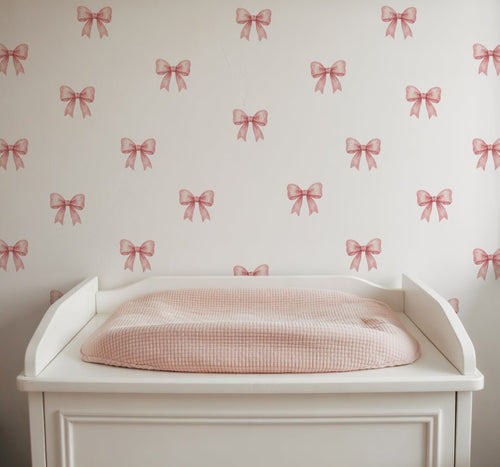
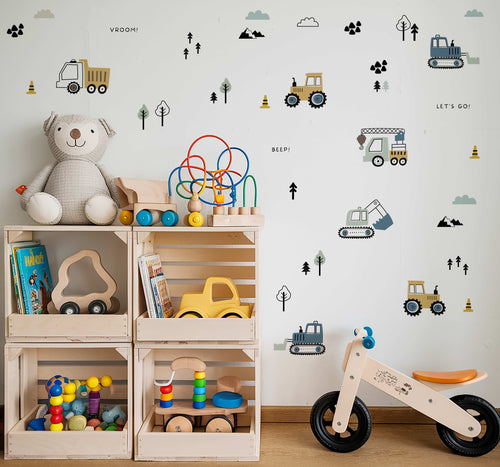
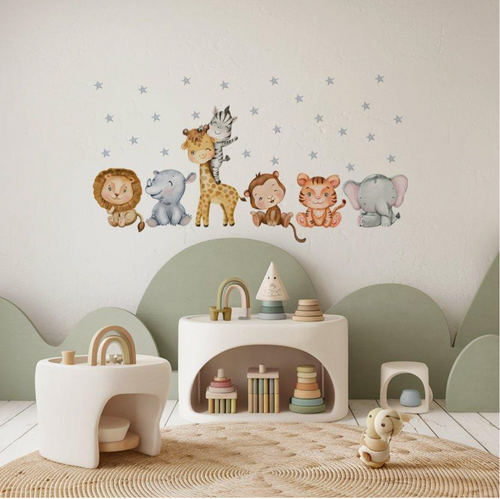
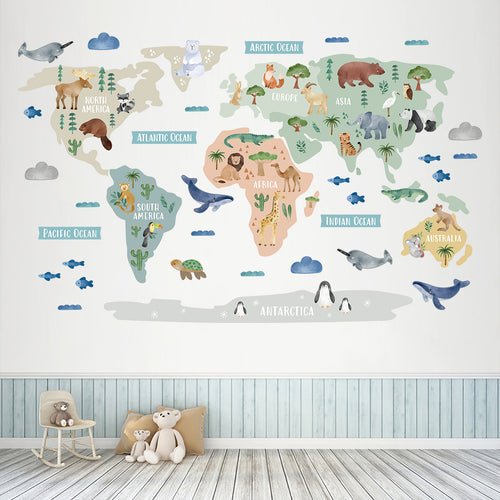


Rainbow vs monochrome stickers for nurseries
Choosing between Rainbow vs monochrome stickers for nurseries does not need to become a decorating dilemma. Rainbow designs bring colour and energy to a child’s room, while monochrome patterns offer a calmer base that pairs easily with changing furniture, bedding and accessories.
Key Takeaways
- Rainbow stickers work well when you want a playful, stimulating space that grows with a curious little one.
- Monochrome designs give you a calm backdrop that makes it easy to swap bedding, furniture and accessories as trends change.
- Think about the size of the room and the amount of natural light before committing to bold colours or softer neutral tones.
- A mix of both styles can work beautifully, perhaps a monochrome base with one or two rainbow accents for warmth.
- Because removable stickers can be peeled away in minutes, you can always change direction once your child develops their own preferences.
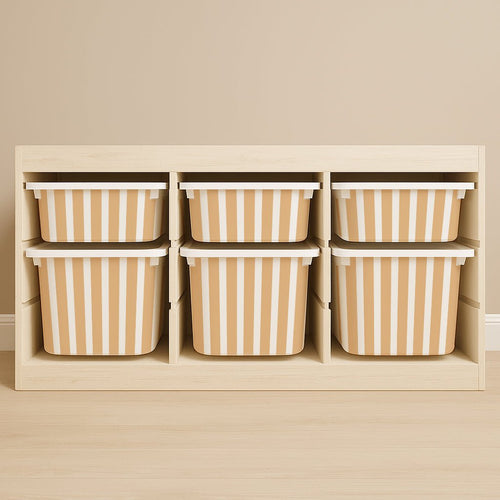
There is no objectively better palette. The right choice depends on the mood you want, natural light, room size and how much visual activity feels comfortable. Think of it as choosing a starting point, not fixing the look forever. For a playful furniture accent, our Check Stickers For Ikea Trofast Drawers add a tidy check pattern to the front-facing units of Ikea Trofast drawer storage.
Rainbow or Monochrome Nursery Stickers? The Quick Answer
Choose rainbow stickers for a cheerful focal point, a nursery with personality or a simple way to pick out colours already used in the room. Choose monochrome stickers for a restful backdrop, easy coordination or a scheme where furniture and soft furnishings provide the colour.
Choose rainbow stickers if.
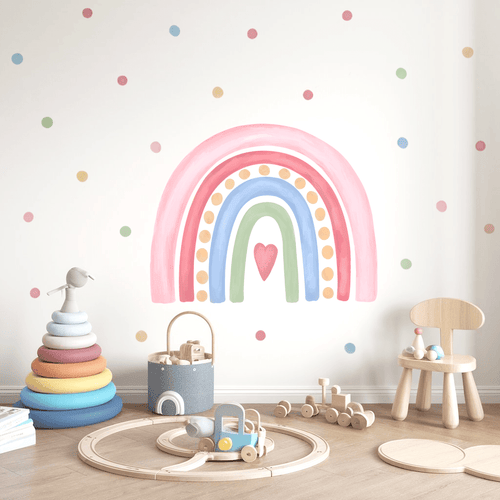
Rainbow designs suit families who enjoy playful interiors and want the room to feel bright, welcoming and full of character. They work well against white, cream or pale grey walls, especially with simple furniture. A rainbow motif gives you several shades to repeat through a cot blanket, changing mat, storage basket or print, helping the room feel considered rather than randomly colourful. Explore the rainbow wall stickers collection for colourful options.
- You want a lively feature area without painting a whole wall.
- Your child enjoys colour, shapes and cheerful visual details.
- You already have two or three accent shades to bring into the room.
- You are decorating a playroom or reading nook that can handle more energy.
Choose monochrome stickers if.
Monochrome suits a gentler, more flexible nursery scheme. Black, white, charcoal and soft grey patterns can feel restful without becoming plain, especially beside timber, natural fibres, warm lighting or textured blankets. Higher-contrast marks may carry more visual weight, so a small group of shapes can create a clear focal point without filling the entire room.
- You want a calm base that can grow with your child.
- Your cot, wardrobe or flooring already has a strong finish.
- You prefer simple styling and easy colour matching.
- The room is small, and you want decoration with a neat visual footprint.
Rainbow vs Monochrome Stickers: Side-by-Side Comparison

When parents ask whether rainbow or monochrome stickers are better for a nursery, practical decorating details matter more than fashion. Lighting, wall colour, furniture scale and the number of patterns already in the room all affect the finished impression. Repeated shapes or stripes usually feel stronger than one isolated motif, while pale, low-contrast designs tend to recede.
| Consideration | Rainbow stickers | Monochrome stickers |
|---|---|---|
| Mood | Cheerful, energetic and playful | Gentle, composed and easy-going |
| Visual impact | Creates an obvious focal point, particularly with repeated colour | Creates definition through shape and contrast rather than many shades |
| Small rooms | Best with open spacing and a limited placement area | Usually easy to contain around a cot, shelf or reading corner |
| Matching | Works well when selected colours appear elsewhere in the room | Pairs readily with most bedding, wood tones and furniture colours |
| Flexibility | Can guide future accessories around a chosen palette | Leaves greater freedom to change colour later |
| Best use | Playful nurseries, feature areas and creative corners | Restful sleep spaces, compact rooms and adaptable schemes |
The case for rainbow stickers, pros and cons
Rainbow stickers bring warmth and help a plain room feel personal. They are useful when you want a clear theme without wallpaper, painted stripes or many individual accessories. Balance matters: if bedding, rug, curtains and wall decoration all compete for attention, the room may feel busy. Keep larger furniture simple, repeat only a few shades and leave clear wall space around the pattern.
Pros
- Introduces personality and colour quickly.
- Gives you several shades to coordinate with soft furnishings.
- Creates a joyful focal point in a neutral room.
Cons
- May need more thought if the room already contains many colours.
- Strong tones can look more pronounced in bright or artificial light.
The case for monochrome stickers, pros and cons
Monochrome stickers offer structure without dictating the rest of your decorating choices. A black-and-white pattern can look crisp beside pale walls, while charcoal, cream and warm grey create a softer finish. This style is not cold by default. Woven baskets, oak tones, a knitted blanket or a warm-toned lamp can make the room cosy and playful. Check stickers for Ikea Trofast drawers add pattern to children’s storage while keeping the wider nursery scheme adaptable.
Pros
- Pairs easily with changing colours and accessories.
- Defines a space through pattern, shape and contrast.
- Works well for a calm nursery or shared room.
Cons
- High contrast may feel bold if used across a large area.
- Very pale combinations can lose definition in low light.
From Bright Rainbow to Soft Monochrome: The Full Colour Spectrum
Rainbow vs monochrome stickers for nurseries do not have to be an either-or decision. Between a bold rainbow wall and a stark black-and-white scheme, gentle palettes can suit your child’s room, existing furniture and available daylight.
Four looks compared: bright rainbow, muted rainbow, warm monochrome and black-and-white
Bright rainbow makes a cheerful focal point against a pale wall, particularly in a playroom or creative corner. Muted rainbow uses dusty pink, soft blue, sage, butter yellow and lavender for a quieter burst of colour. Warm monochrome combines cream, tan, oatmeal, terracotta and gentle grey. Black-and-white relies on clear contrast and simple shapes. The same design can feel different beside white furniture, natural wood or darker flooring, so assess the whole room rather than the sticker colour alone.
| Palette | Mood | Works particularly well with | Planning tip |
|---|---|---|---|
| Bright rainbow | Cheerful and energetic | White walls, simple furniture and plain bedding | Leave open space around repeated motifs |
| Muted rainbow | Gentle and playful | Light timber, cream textiles and soft lighting | Repeat one or two shades elsewhere |
| Warm monochrome | Cosy and relaxed | Rattan, wool, oak and earthy accessories | Mix textures so the scheme feels layered |
| Black-and-white | Crisp and graphic | Minimal furniture and colourful small accessories | Use contrast in a defined zone rather than everywhere |
Are pastel rainbow stickers a good compromise?
Yes, pastel rainbow stickers can sit between colour and minimalism. They bring personality without the stronger visual weight of saturated shades, making them useful in a small nursery, a north-facing room or a calm sleeping area. Test the palette beside wall paint, cot bedding and flooring first. Natural light, lamps and surrounding colours can change how pale shades appear throughout the day.
Can a monochrome nursery still feel warm and playful?
Absolutely. Monochrome becomes softer with charcoal or warm grey instead of pure black, plus tactile details such as a knitted blanket, woven basket, timber shelf, felt bunting or cheerful book display. A monochrome base also gives one or two rainbow accents room to stand out. Try a colourful cushion in the reading nook or a bright storage detail instead of spreading every shade across the walls. The room stays welcoming while leaving space for your child’s interests to change.
Planning Your Layout: Scale, Spacing and Feature Walls
Good placement can make any palette feel intentional. Repeated shapes and stripes form a stronger pattern when they are close together, while larger gaps give each motif more breathing room. A close cluster can define a reading nook or cot corner, while a wider arrangement may suit a larger wall. Choose a layout that fits the wall, furniture beneath it and existing visual activity.
A simple pre-application planning method
- Photograph the wall. Take a picture from the doorway to judge the sticker group alongside the cot, shelves, windows and door.
- Mark approximate zones. Use removable tape or small paper notes to outline the focal area, keeping clear of corners, switches and furniture edges.
- Arrange the pieces on the floor. Try different gaps, heights and groupings before anything touches the wall. Step back and view the layout from the cot and entrance.
- Begin with the focal area. Place the most noticeable motif first, then build out gradually. This makes it easier to stop while the wall still feels balanced.
Room-by-room ideas: cot wall, changing area, reading nook, playroom and small nurseries
For a cot wall, a low horizontal arrangement can sit above the furniture without making the ceiling feel crowded. A changing area may suit a small grouping beside the unit, where a simple pattern adds interest during nappy changes. In a reading nook, closer spacing can create a cosy backdrop behind a floor cushion or book ledge. Playrooms have room for a larger feature wall, while small nurseries usually suit one defined section instead of decoration on every surface.
Dark rooms may benefit from pale tones and generous spacing, while bright rooms can carry stronger contrast. Keep the busiest pattern on one wall and let the remaining surfaces rest. The best choice for Rainbow vs monochrome stickers for nurseries depends partly on this visual breathing space, not only your preferred colour family.
Coordinating stickers with your cot, furniture and accessories
Start with the largest fixed pieces: the cot, wardrobe, drawers and flooring. White or pale schemes can support clearer colour, while warm timber pairs naturally with muted rainbow or earthy monochrome. Repeat one shade in a blanket, storage basket or print, but do not try to match every item exactly. For a furniture detail, check stickers for Ikea Trofast drawers are designed for the front-facing units of Ikea Trofast drawer storage, adding a neat check pattern to a practical children’s storage piece.
Distribute visual weight across the room. If a feature wall has a bold pattern, choose quieter bedding and accessories nearby. If the walls are soft, a colourful lamp, rug or storage accent can bring a playful note. This creates a nursery that feels personal, comfortable and ready to grow with your little one.
Why Removable Stickers Beat Paint When You Can't Decide
Choosing a nursery colour can feel daunting. A paint swatch may look gentle in the shop, then appear stronger across a whole wall once daylight, lamps and nearby furniture join the picture. Removable stickers offer a lower-commitment way to add personality, test a focal area and make changes without planning a full repaint. They suit parents who want a room that can change as their child grows.
Why colours look different on a whole wall, and how to test safely
Colour perception shifts with wall size, surrounding shades, natural and artificial light, and the time of day. A gentle yellow can seem more saturated beside bright white, while pale grey may look cooler in a north-facing room. Repeated shapes can also feel stronger than one isolated motif across a wide area.
Place a sample or a few pieces against the intended surface and view them in the morning, afternoon and evening. Check them beside the cot, flooring, curtains and bedding. Keep the test area clean and avoid placing decoration where it could be pulled, chewed or reached from the cot.
How to apply and remove your stickers
Start with a smooth, clean and fully dry painted surface. Dust, grease, dampness, textured finishes, recently painted walls and paint with poor adhesion can affect application and removal, so follow the product instructions and test a discreet area first. Measure your focal zone, arrange the pieces before peeling and smooth each sticker carefully from one side to the other. Avoid repeatedly repositioning the same piece, since this can reduce reliable adhesion.
When ready for a new look, lift an edge gently and peel slowly instead of pulling sharply. Work at a steady angle and stop if the paint begins to lift. Keep the original packaging or photograph the layout before changing it if you may want to recreate it in another room.
Rental-friendly decorating and designs that grow with your child
Removable decoration suits rented homes because it avoids paint, wallpaper and permanent fixings, subject to wall condition and product guidance. Check your tenancy agreement, use a small test patch and remember that no removable option can guarantee a perfect result on every surface. A smooth painted wall is the safest starting point; textured, damp or flaking surfaces need extra care.
For adaptable storage, check stickers for Ikea Trofast drawers are designed for the front-facing units of Ikea Trofast drawer storage. The decorative check pattern personalises a practical children’s storage piece without presenting it as a permanent furniture change. Check Stickers For Ikea Trofast Drawers can suit a nursery, playroom or shared bedroom scheme, giving you a small detail to refresh as your little one’s tastes change.
Frequently Asked Questions
Are rainbow wall stickers waterproof?
Rainbow wall stickers should not be assumed to be waterproof, as waterproofing is not confirmed in the available product information. For nursery styling, choose a design based on its colour palette and placement, and check the individual product details before using it where moisture may be present.
Are rainbow wall stickers easy to apply?
Rainbow wall stickers are designed to be easy to apply when used as directed. A clean, dry, smooth nursery wall helps create a neat finish, while textured or special-effect surfaces may not be suitable. Check the product guidance before application, particularly if the surface has a specialist paint finish.
What sizes of rainbow wall stickers are available?
Rainbow wall sticker sizes vary by design, and exact dimensions are not provided in the available information. Compare the listed product details before choosing a sticker, then consider the nursery’s wall space, furniture scale and natural light so the decoration feels balanced.
Where can I buy rainbow wall stickers?
Rainbow wall stickers can be bought from the Nursery Stickers online store, subject to the availability shown on each product page. Nursery Stickers also offers rainbow and monochrome styling ideas, plus decorative check stickers made specifically for IKEA Trofast drawer units.
What are the best wall decals for a nursery?
The best nursery wall decals are designs that suit the room’s mood, light, size and existing furnishings. Rainbow patterns bring colour and personality, while monochrome designs provide a calmer, flexible backdrop. For IKEA Trofast storage, check stickers are made specifically for the drawer units and are decorative accessories rather than furniture.
Should I choose rainbow or monochrome stickers for a small nursery?
Rainbow or monochrome stickers can both suit a small nursery, depending on the visual effect you want. Monochrome patterns are often easier to contain around a cot, shelf or reading corner, while rainbow designs work best with open spacing and a limited placement area.
How do I match nursery stickers with furniture and bedding?
Nursery stickers match furniture and bedding best when their colours or tones are repeated elsewhere in the room. Rainbow designs can guide a small accent palette, while monochrome patterns pair readily with varied bedding, timber tones and changing accessories. Keeping larger pieces simple helps the overall scheme feel composed.